

Introduction: How Are Disposable Razors Manufactured?
Have you ever wondered how millions of disposable razors are manufactured every day and delivered to supermarkets, wholesalers, distributors, and personal care brands worldwide?
The Disposable Razor Manufacturing Process involves several interconnected production stages, including raw material selection, stainless steel blade processing, plastic injection molding, component assembly, quality inspection, and final packaging.
For international buyers, understanding the Disposable Razor Manufacturing Process is important when selecting a reliable manufacturer. Production technology, blade quality, material selection, manufacturing capacity, and quality control directly influence product performance, consistency, and purchasing costs.
A professional disposable razor factory must coordinate every production stage to ensure that each razor meets the buyer’s specifications.
In this guide, we explain the complete Disposable Razor Manufacturing Process, introduce the main manufacturing technologies, discuss quality inspection standards, and provide practical advice for choosing a reliable OEM or ODM razor supplier.

1. What Is the Disposable Razor Manufacturing Process?
The Disposable Razor Manufacturing Process refers to the complete industrial procedure used to transform raw materials into finished disposable shaving products.
It combines metal processing, plastic injection molding, automated assembly, blade installation, inspection, and packaging.
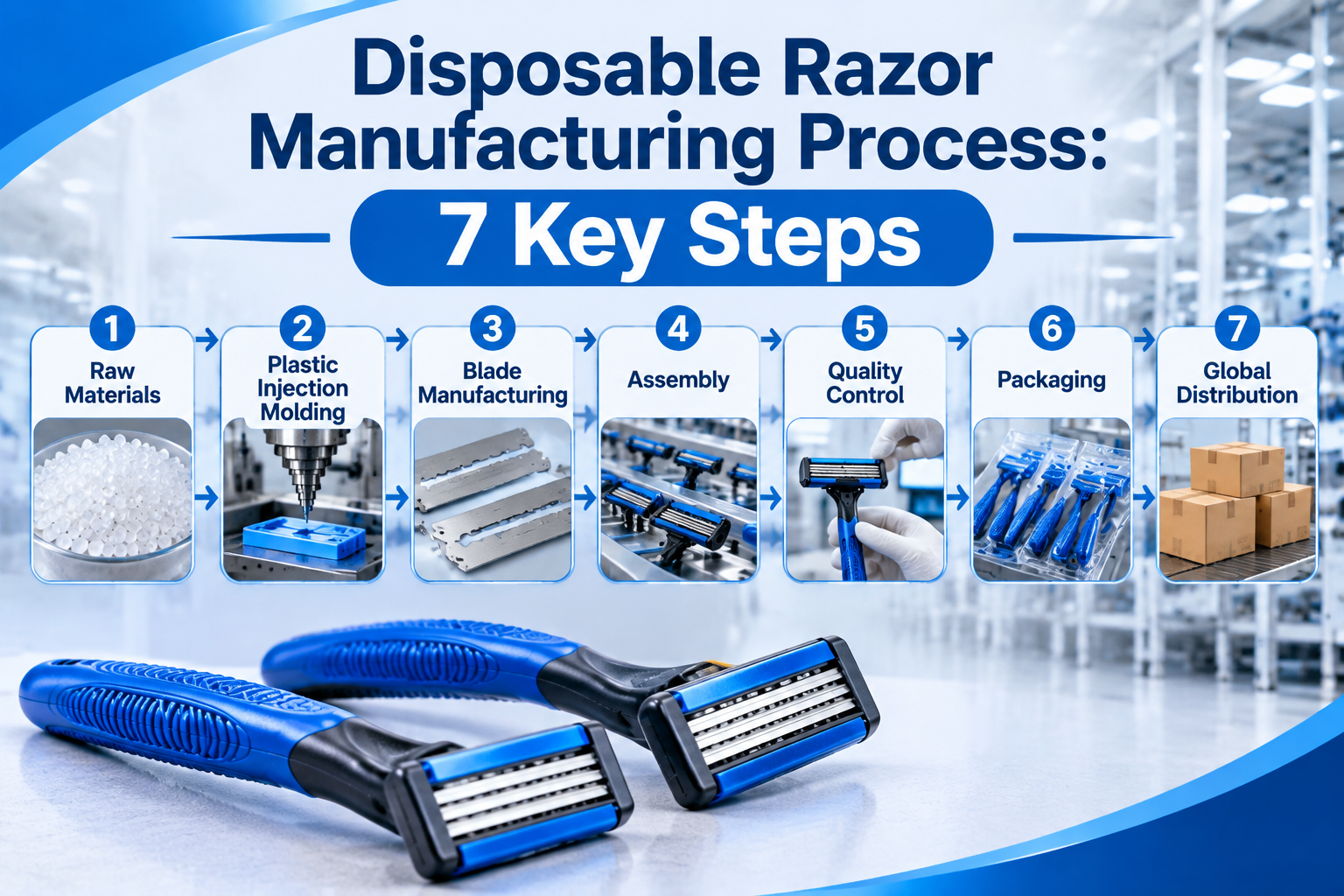
A typical manufacturing workflow includes seven major stages:
-
Raw material selection and preparation.
-
Stainless steel blade manufacturing.
-
Plastic injection molding.
-
Razor component production.
-
Automated razor assembly.
-
Quality inspection and performance testing.
-
Packaging and shipment preparation.
Each stage has a direct influence on the final product.
For example, blade material and sharpening technology affect cutting performance, while injection molding determines the handle’s shape, strength, and appearance.
The Disposable Razor Manufacturing Process must therefore be carefully controlled from the beginning of production to final shipment.
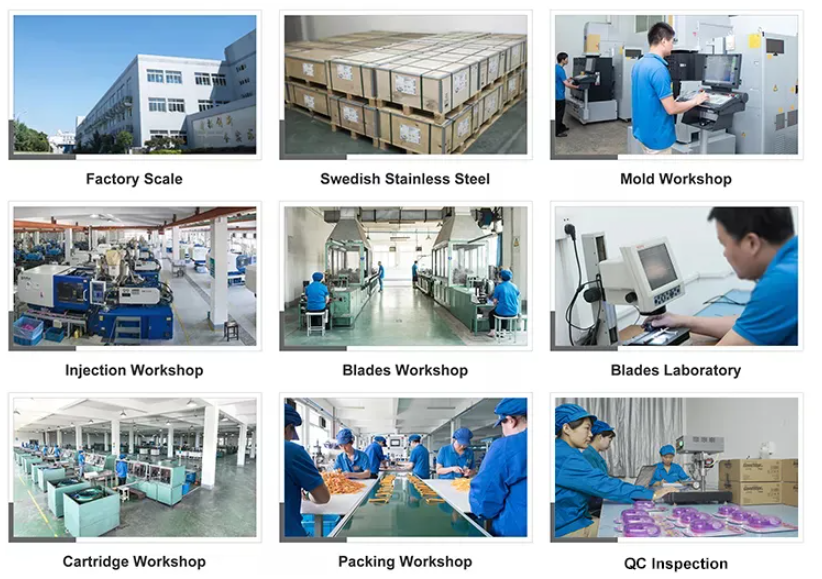
2. Step One: Raw Material Selection and Preparation
Raw material selection is the foundation of the Disposable Razor Manufacturing Process.
A disposable razor generally consists of several major components:
-
Stainless steel blades
-
Plastic handle
-
Razor head
-
Lubricating strip (depending on the design)
-
Protective cap
-
Packaging materials
Stainless Steel for Razor Blades
Stainless steel is widely used in razor blade production because of its corrosion resistance, hardness, and ability to maintain a sharp cutting edge.
The quality of the steel directly affects blade durability and shaving performance.
Some manufacturers use Swedish stainless steel, including materials sourced from Sandvik, depending on their product specifications.
Important considerations include:
-
Steel composition
-
Hardness
-
Corrosion resistance
-
Thickness consistency
-
Surface quality
-
Compatibility with sharpening and coating processes
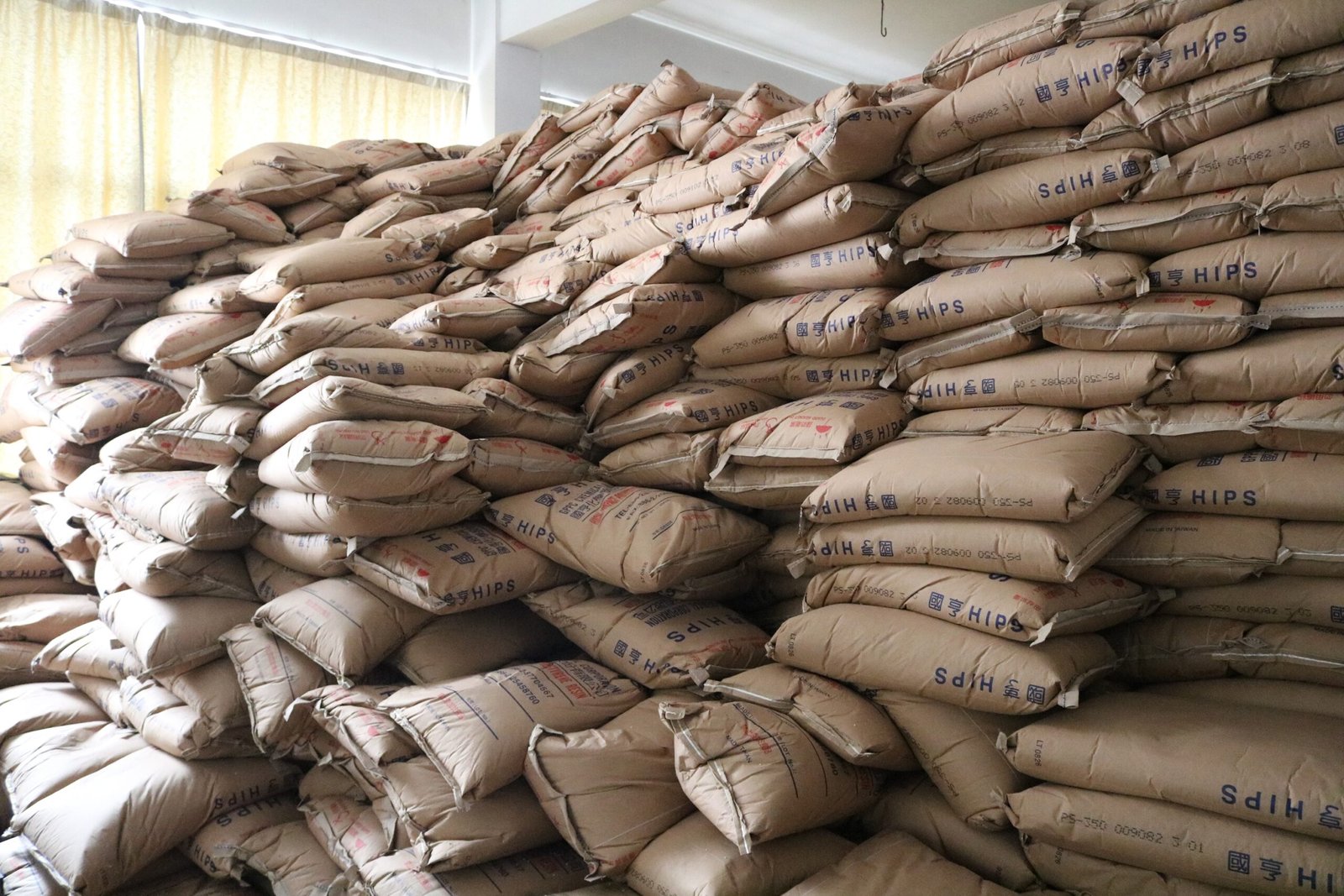
Plastic Materials for Razor Handles
Plastic materials are another essential part of the Disposable Razor Manufacturing Process.
Common materials include:
| Material | Main Characteristics | Typical Application |
|---|---|---|
| PP | Lightweight and cost-effective | Standard razor handles |
| ABS | Good rigidity and appearance | Premium-style handles |
| PS | Good molding properties | Selected disposable razor components |
| TPE | Soft and flexible | Non-slip grip areas |
The final material selection depends on the product design, target market, cost requirements, and performance expectations.
For B2B buyers, confirming the material specifications before mass production helps avoid unnecessary changes during manufacturing.
3. Step Two: Stainless Steel Razor Blade Manufacturing
Blade manufacturing is one of the most technically important stages in the Disposable Razor Manufacturing Process.
A disposable razor may contain one, two, three, five, or even seven blades, depending on the product design.
The manufacturing process for stainless steel razor blades generally involves the following operations.
3.1 Steel Strip Preparation
Stainless steel strips are prepared according to the required blade specifications.
The material must have consistent thickness and surface quality to support subsequent processing.
3.2 Blade Stamping and Cutting
Specialized stamping equipment cuts the steel strips into individual blade blanks.
Precision is important because dimensional variations can affect blade positioning and final assembly.
3.3 Heat Treatment
Heat treatment is used to achieve the required hardness and mechanical properties.
The process must be controlled carefully to maintain the balance between hardness, durability, and resistance to damage.
3.4 Blade Grinding and Sharpening
Grinding and sharpening create the cutting geometry of the razor blade.
Precision grinding equipment is used to produce consistent cutting edges.
This is a critical operation in the Disposable Razor Manufacturing Process because blade sharpness and edge consistency directly influence shaving performance.
3.5 Surface Coating
Depending on the blade specification, manufacturers may apply additional surface treatments or coatings.
These may include materials designed to reduce friction, improve corrosion resistance, or enhance cutting performance.
The exact coating technology varies between manufacturers and product models.
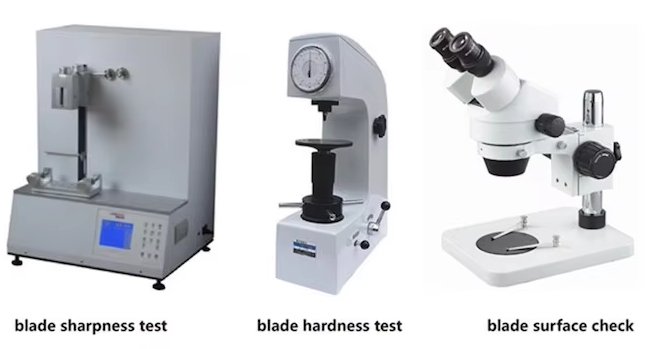
3.6 Blade Inspection
Finished blades are inspected for:
-
Cutting edge consistency
-
Dimensional accuracy
-
Surface defects
-
Corrosion resistance
-
Hardness requirements
Only blades that meet the established specifications should proceed to the next production stage.
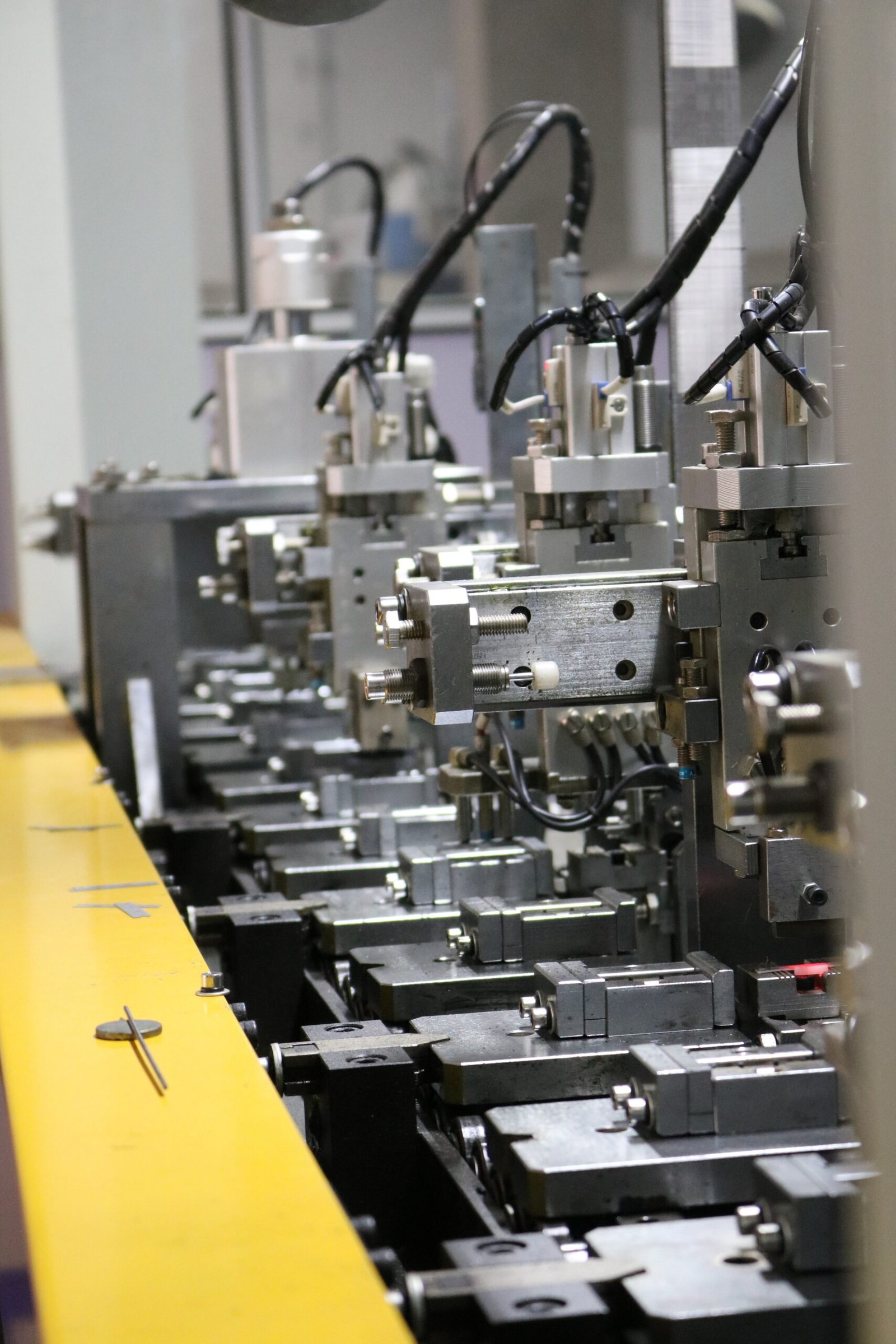
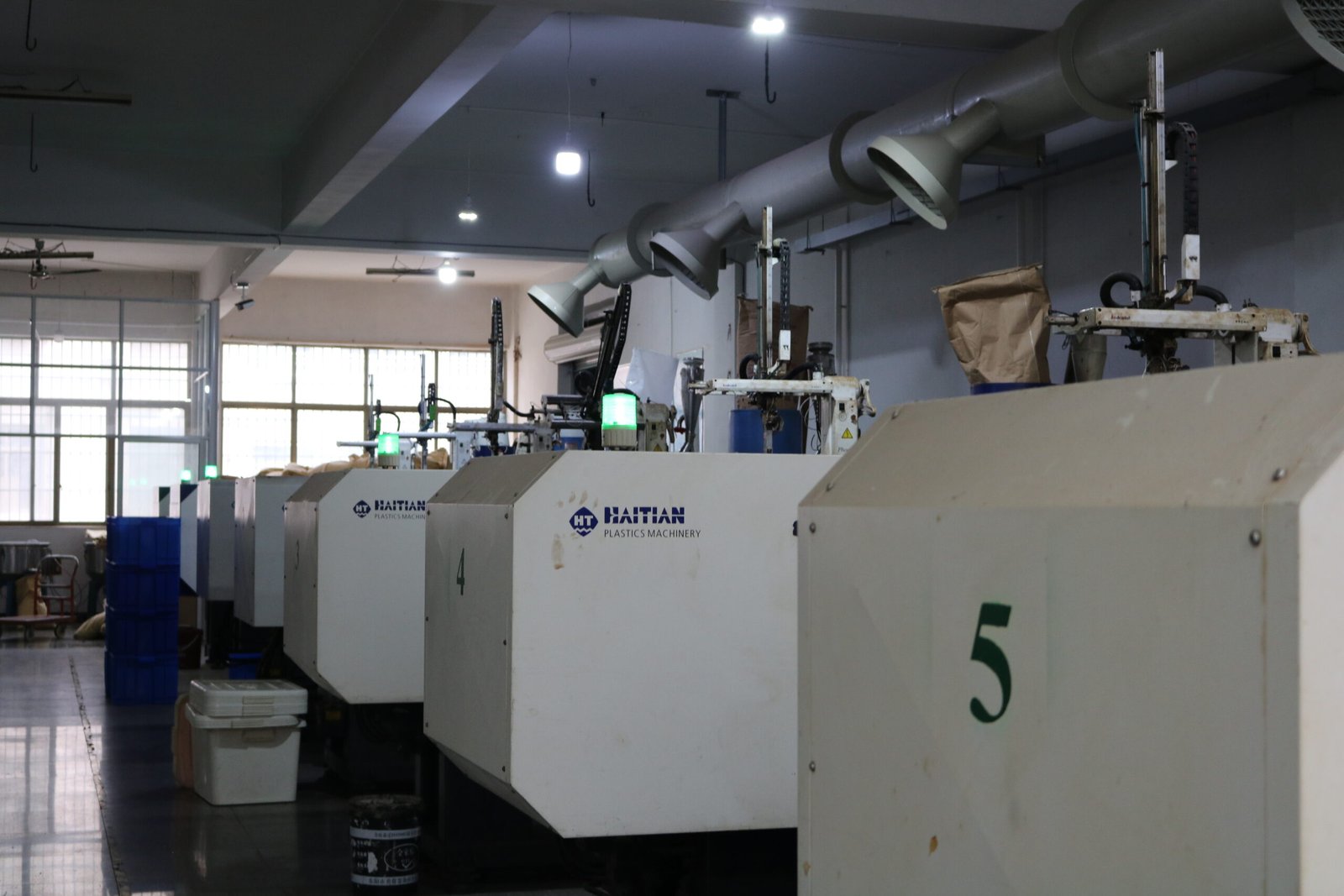
4. Step Three: Plastic Injection Molding
Plastic injection molding is another essential operation in the Disposable Razor Manufacturing Process.
This stage produces the plastic components that form the razor handle and head.
How Does Plastic Injection Molding Work?
The process generally follows these steps:
-
Plastic raw materials are fed into the injection molding machine.
-
The material is heated until it reaches a suitable molten state.
-
Molten plastic is injected into a precision mold.
-
The plastic cools and solidifies inside the mold.
-
The molded components are removed.
-
Components are inspected before assembly.
Razor Handle Manufacturing
The handle must provide a comfortable grip and sufficient structural strength.
Different handle designs are available depending on the target market.
For example:
-
Standard straight handles
-
Ergonomic handles
-
Non-slip grip handles
-
Lightweight travel razors
-
Custom-colored private label handles
Razor Head Manufacturing
The razor head is designed to hold the blades in the correct position.
Its dimensions and structure influence blade alignment, shaving angle, and overall product performance.
In the Disposable Razor Manufacturing Process, mold accuracy is important because even small dimensional differences can create assembly problems.
For OEM and ODM buyers, custom molds can also be developed according to product drawings, reference samples, or specific design requirements.
5. Step Four: Razor Component Manufacturing and Preparation
Before final assembly, all components must be prepared and checked.
A typical disposable razor production line may involve:
| Component | Manufacturing or Preparation Method |
|---|---|
| Razor handle | Plastic injection molding |
| Razor head | Plastic injection molding |
| Stainless steel blade | Stamping, grinding and finishing |
| Lubricating strip | Specialized material processing |
| Protective cap | Plastic injection molding |
| Packaging | Printing, cutting and forming |
Some disposable razors also include additional features, such as lubricating strips, textured handles, or protective covers.
The Disposable Razor Manufacturing Process must ensure that all components are compatible with the selected razor model.
Proper component preparation improves assembly efficiency and reduces the possibility of defective products.
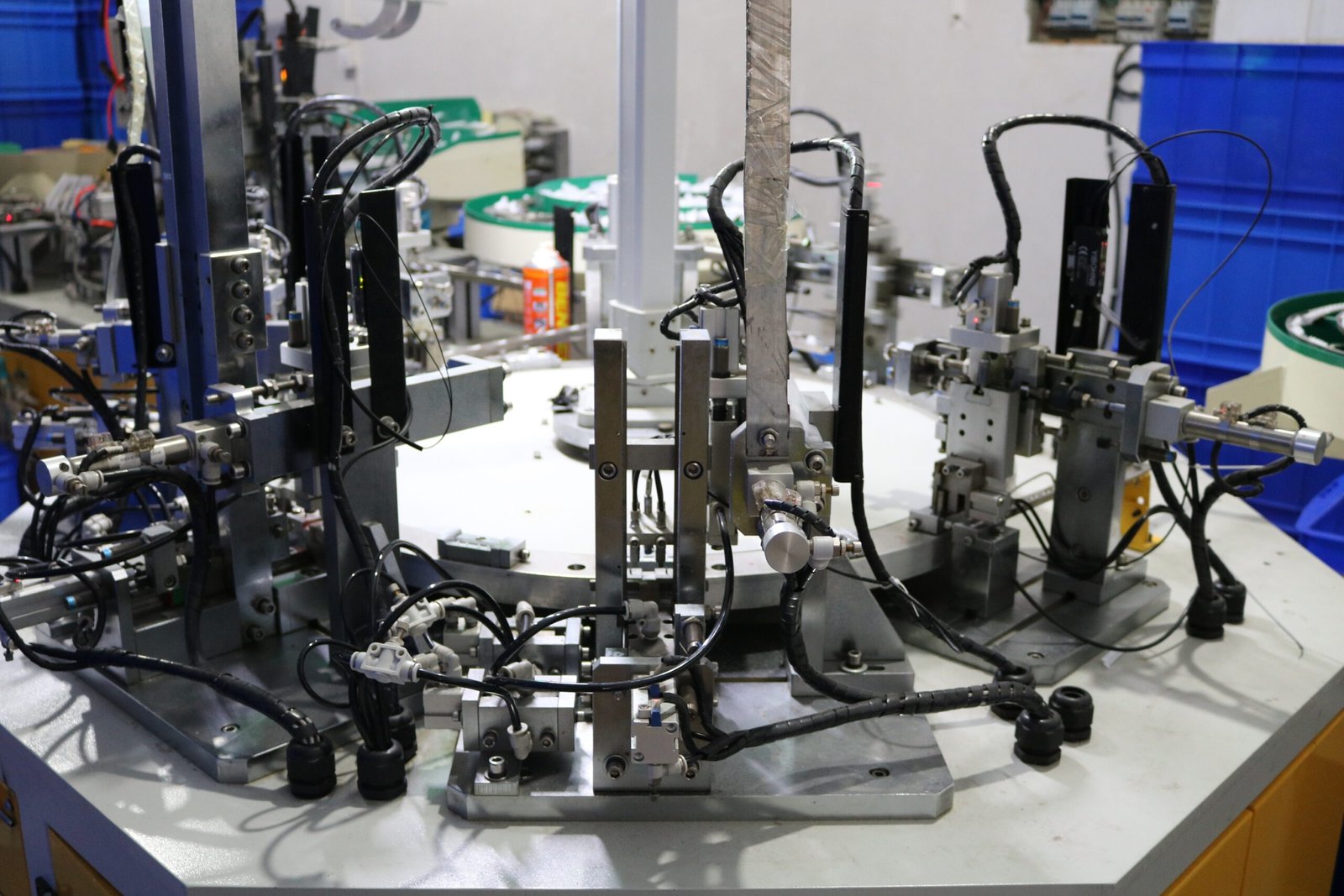
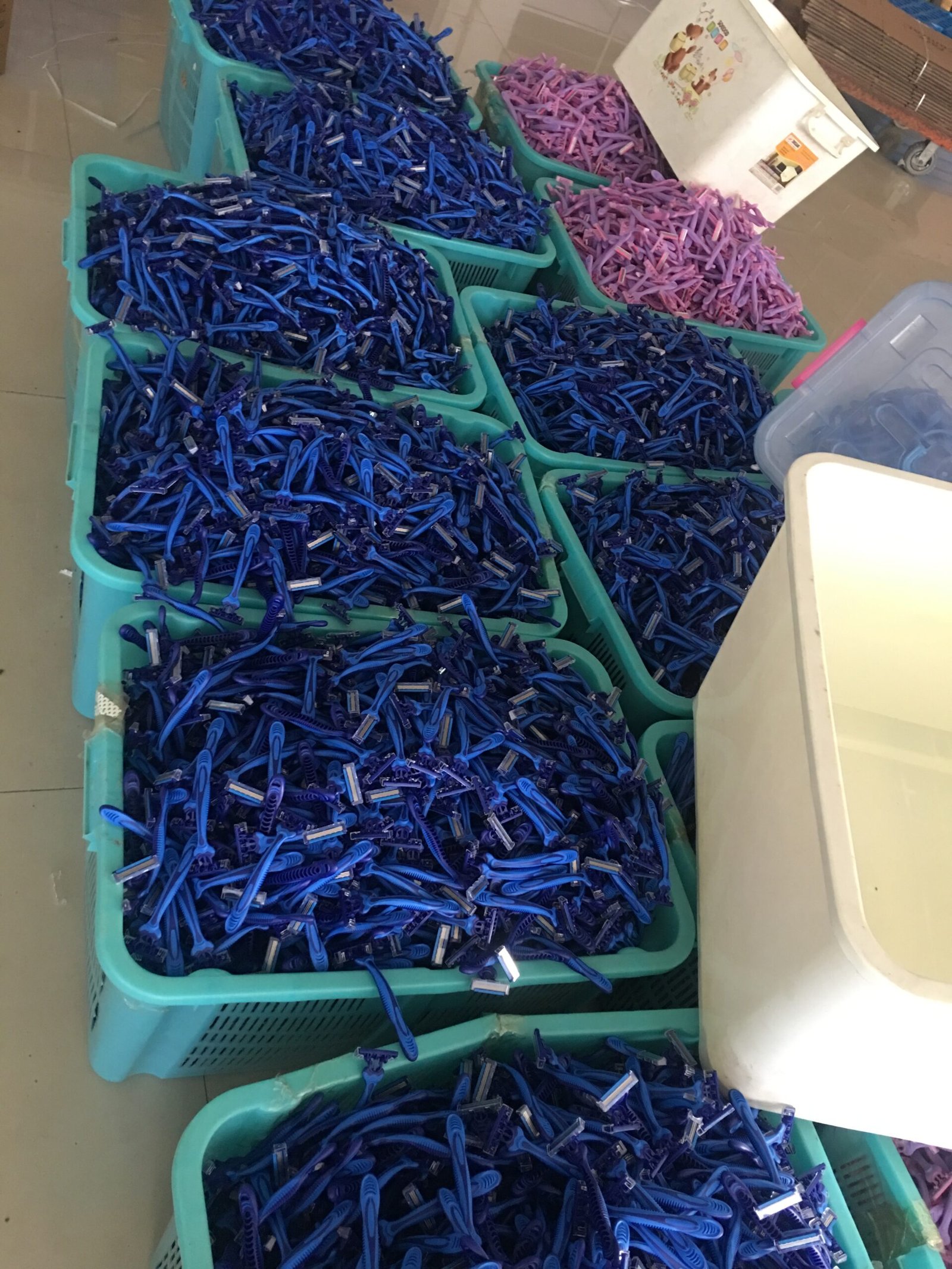
6. Step Five: Disposable Razor Assembly
Assembly is where individual components become a complete shaving product.
Modern disposable razor factories use specialized assembly equipment and production lines to improve manufacturing efficiency and product consistency.
Main Assembly Operations
The assembly process generally includes:
1. Handle Feeding
Molded plastic handles are transferred to the assembly line.
2. Razor Head Preparation
The razor head components are positioned for blade installation.
3. Blade Installation
The required number of stainless steel blades is installed into the razor head.
Blade positioning must meet the product’s engineering specifications.
4. Head and Handle Assembly
The razor head is connected to the handle according to the product design.
5. Protective Component Installation
Additional components, such as protective caps or lubricating strips, are installed when required.
6. Finished Product Inspection
Completed razors undergo visual and functional checks before packaging.
Automated vs. Manual Assembly
Automation plays an important role in the modern Disposable Razor Manufacturing Process.
| Comparison | Automated Assembly | Manual Assembly |
|---|---|---|
| Production efficiency | Generally higher | Generally lower |
| Consistency | More standardized | Depends on operator |
| Labor requirements | Lower per unit | Higher |
| Production capacity | Suitable for large orders | Suitable for selected operations |
| Quality monitoring | Easier to standardize | Requires close supervision |
Many factories combine automated equipment with manual inspection to balance production efficiency and quality assurance.
For international buyers, factory automation is an important factor when evaluating large-volume supply capabilities.
7. Step Six: Quality Control and Product Testing
Quality control is one of the most important parts of the Disposable Razor Manufacturing Process.
A reliable manufacturer should establish inspection procedures covering incoming materials, production operations, finished products, and packaging.
7.1 Incoming Material Inspection
Before production begins, raw materials should be checked against approved specifications.
Inspection may include:
-
Stainless steel material specifications
-
Plastic material consistency
-
Component dimensions
-
Lubricating strip quality
-
Packaging material quality
7.2 Blade Sharpness Inspection
Blade sharpness and cutting consistency are essential performance considerations.
Manufacturers should use appropriate testing methods to verify that blades meet the product’s defined requirements.
7.3 Assembly Inspection
Finished razors should be checked for:
-
Blade positioning
-
Component alignment
-
Handle integrity
-
Head stability
-
Missing components
-
Visible defects
7.4 Functional Testing
Depending on the product specification, functional testing may include:
-
Cutting performance
-
Handle strength
-
Blade retention
-
Water resistance of applicable components
-
Corrosion resistance
-
Lubricating strip performance
7.5 Final Packaging Inspection
Before shipment, packaging should be checked to ensure that product information, quantities, barcodes, and carton specifications match the purchase order.
Professional quality management helps manufacturers maintain consistent product standards across large production batches.
8. Step Seven: Disposable Razor Packaging and Shipment
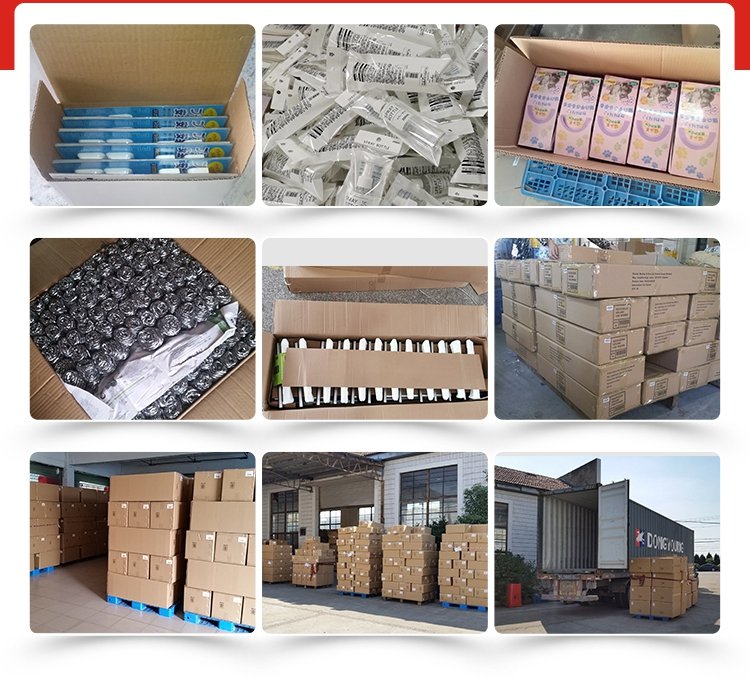
Packaging is the final stage of the Disposable Razor Manufacturing Process.
Different buyers require different packaging formats depending on their distribution channels and market positioning.
Common packaging options include:
| Packaging Type | Suitable Buyers |
|---|---|
| Individual blister card | Supermarkets and retail brands |
| Multi-piece blister pack | Wholesalers and distributors |
| Polybag packaging | Bulk importers |
| Customized printed packaging | Private label brands |
| Display box packaging | Retail chains and promotional channels |
OEM and Private Label Packaging
OEM packaging allows buyers to customize their product presentation according to their brand requirements.
Customization options may include:
-
Brand logo
-
Packaging design
-
Product colors
-
Barcode
-
Product specifications
-
Language requirements
-
Carton markings
After packaging inspection, finished goods are prepared for export shipment.
A professional supplier should also confirm carton dimensions, gross weight, loading quantities, and shipping arrangements before dispatch.
9. How Long Does the Disposable Razor Manufacturing Process Take?
The manufacturing lead time depends on product specifications, order quantities, packaging requirements, and factory production schedules.
For standard disposable razor models, the production process is generally simpler than developing a completely new customized product.
The following table illustrates the typical stages involved in a manufacturing project.
| Production Stage | Main Activities |
|---|---|
| Product confirmation | Model, blades and specifications |
| Sample preparation | Product samples and approval |
| Material preparation | Steel, plastic and packaging |
| Manufacturing | Molding, blade production and assembly |
| Quality inspection | Product and packaging checks |
| Packing and shipment | Carton packing and export preparation |
Actual lead times should be confirmed with the manufacturer based on the order quantity and production schedule.
For customized projects, buyers should allow additional time for packaging artwork approval, mold development, and sample confirmation.
10. What Equipment Is Used in Disposable Razor Manufacturing?
A modern disposable razor factory requires different types of industrial equipment to complete the Disposable Razor Manufacturing Process.
Typical equipment includes:
| Equipment | Manufacturing Function |
|---|---|
| Injection molding machines | Produce plastic razor components |
| Blade stamping machines | Cut stainless steel blade blanks |
| Blade grinding machines | Sharpen blade edges |
| Heat treatment equipment | Control blade hardness |
| Coating equipment | Apply specified blade coatings |
| Automatic assembly machines | Assemble razor components |
| Inspection equipment | Check product specifications |
| Packaging machines | Pack finished razors |
The number of machines and production lines varies according to factory size, product range, and manufacturing technology.
For buyers planning long-term cooperation, factory equipment and actual production capabilities are important evaluation criteria.
11. How to Choose a Reliable Disposable Razor Manufacturer?
Understanding the Disposable Razor Manufacturing Process is only the first step.
Choosing the right manufacturer is equally important for importers, distributors, wholesalers, and private label brands.
Here are seven factors worth evaluating.
1. Manufacturing Experience
Look for a factory with established experience in disposable razor manufacturing.
An experienced manufacturer is generally more familiar with production challenges, material selection, and product specifications.
2. Production Capacity
Ask about the number of production lines, automated machines, daily output, and ability to handle repeat orders.
Large production capacity can be especially important for supermarket chains and major distributors.
3. Blade Material and Quality
Ask about stainless steel specifications, blade processing technology, and quality inspection procedures.
4. Product Range
A supplier offering different blade configurations, handle designs, and packaging formats may provide greater flexibility for your product portfolio.
5. OEM and ODM Services
If you are building your own shaving brand, check whether the manufacturer offers:
-
Private label packaging
-
Customized colors
-
Logo printing
-
Product development
-
OEM and ODM services
-
Sample approval before mass production
6. Quality Inspection
Confirm whether the factory supports internal quality inspections and third-party inspections through organizations such as SGS or BV when required.
7. Export Experience
A reliable export-oriented manufacturer should understand international packaging requirements, export documentation, shipment coordination, and communication with overseas buyers.
12. Why Choose Gememe for Disposable Razor Manufacturing?
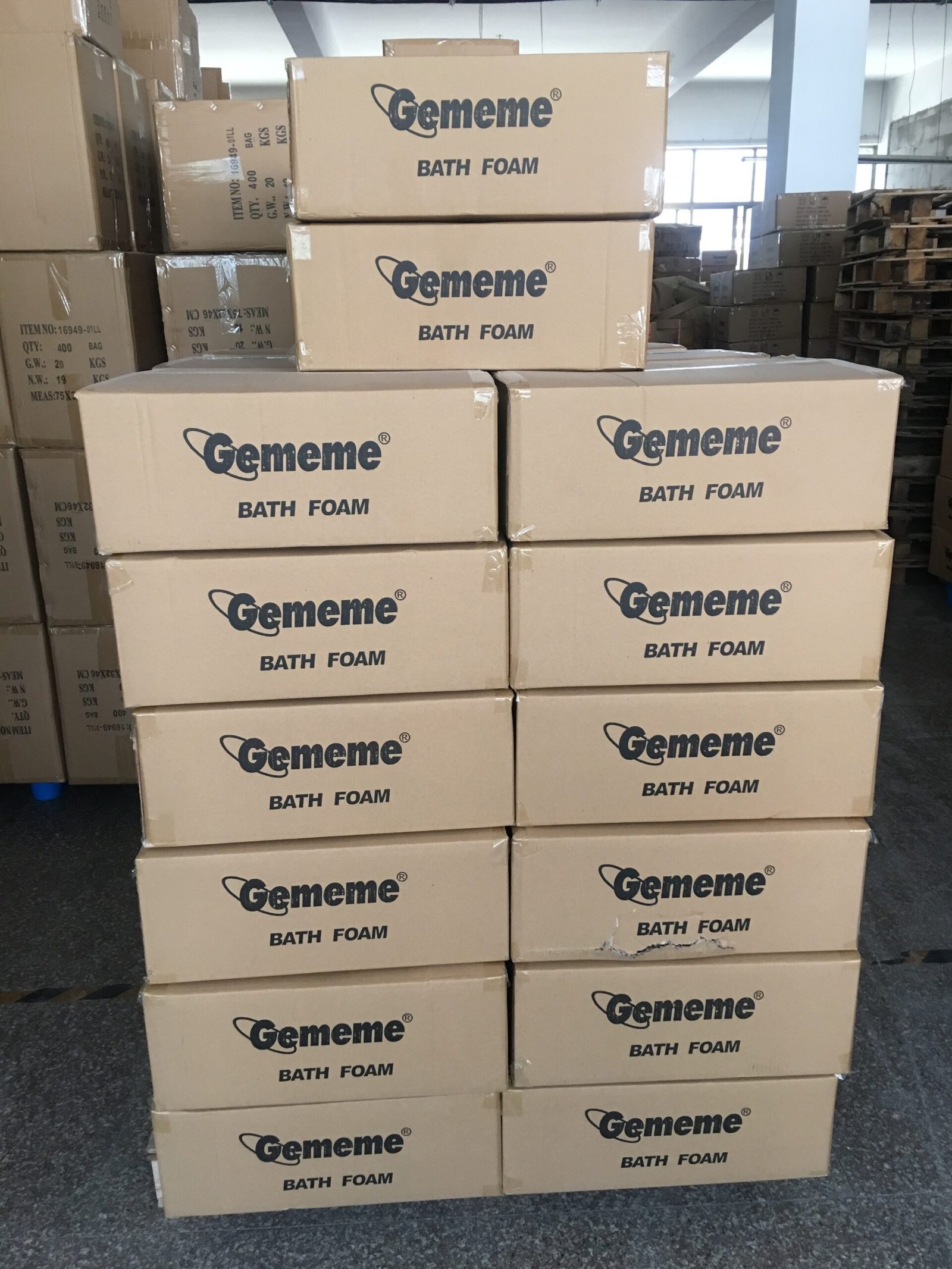
Gememe is a disposable razor brand supplied by Hongli Yida Trading Company, an export-oriented manufacturer based in Yiwu, Zhejiang, China.
With experience in disposable razor manufacturing since 1990, the company focuses on supplying disposable shaving products to international B2B customers.
Its manufacturing and supply capabilities include:
-
Approximately 30,000 square meters of factory facilities.
-
More than 100 automatic machines.
-
Over 30 production and assembly lines.
-
Reported production capacity of up to 15 million razors per day.
-
Disposable razors with 1–7 blade configurations.
-
Stainless steel blade options, including Swedish steel.
-
OEM, ODM, and private label services.
-
Customized product colors and packaging.
-
Samples available for buyer approval before mass production.
Products for International B2B Buyers
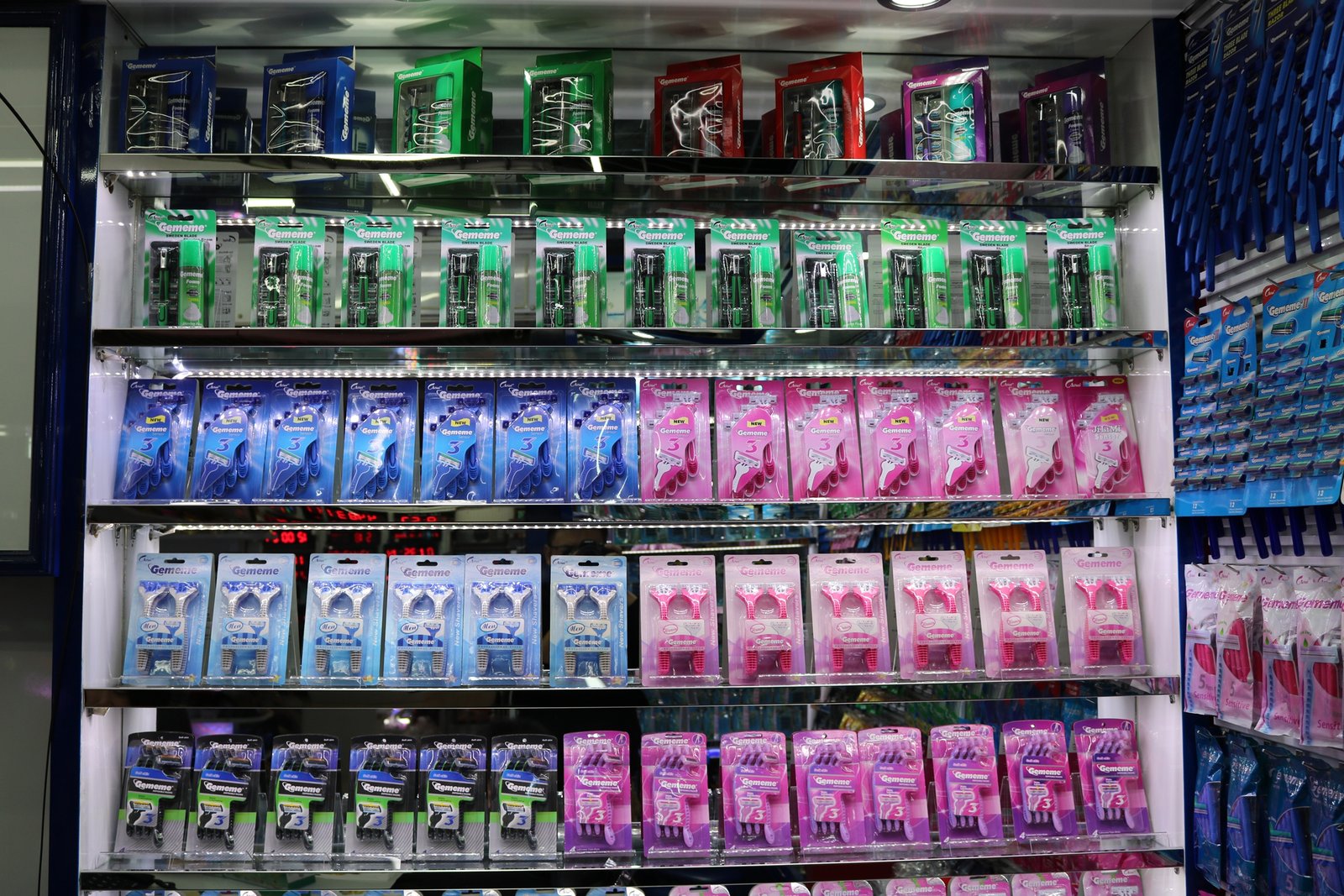
Gememe supplies different disposable shaving products for wholesalers, importers, distributors, and private label brands.
Product options include:
-
Single-blade disposable razors
-
Twin-blade disposable razors
-
Three-blade disposable razors
-
Multi-blade shaving razors
-
Customized private label razors
Flexible Manufacturing and Packaging Solutions
Different markets have different product preferences and packaging requirements.
Gememe supports B2B buyers with product selection, customized colors, private label packaging, and production coordination.
Before mass production, buyers can request samples to confirm product specifications and appearance.
For larger orders, buyers can also arrange third-party inspections or buyer-agent inspections according to their requirements.
If you are looking for a Chinese disposable razor manufacturer, understanding the Disposable Razor Manufacturing Process and evaluating the supplier’s actual production capabilities can help you make a more informed purchasing decision.
Learn more: https://yidarazor.com/
Contact: info@yidarazor.com
WhatsApp: +86 186 2672 6833

13. Frequently Asked Questions About the Disposable Razor Manufacturing Process
Q1. What are the main steps in the Disposable Razor Manufacturing Process?
The main steps include raw material selection, stainless steel blade manufacturing, plastic injection molding, component preparation, razor assembly, quality inspection, and packaging.
Each stage contributes to the final product’s quality and manufacturing consistency.
Q2. What materials are used to manufacture disposable razors?
Disposable razors commonly use stainless steel for blades and plastic materials such as PP and ABS for handles and other components.
Some models also include TPE grips, lubricating strips, and protective plastic caps.
Q3. How are disposable razor blades manufactured?
Razor blades are generally produced through steel strip preparation, stamping, heat treatment, precision grinding, sharpening, surface finishing, and quality inspection.
The exact production specifications depend on the blade design and manufacturer.
Q4. How many blades can a disposable razor have?
Disposable razors are available in different configurations, commonly including one, two, three, five, and other multi-blade designs.
The suitable configuration depends on product positioning, target customers, and market demand.
Q5. Can disposable razors be customized?
Yes. Many manufacturers offer OEM and ODM services.
Customization may include product colors, handle designs, blade configurations, brand logos, and retail packaging.
Q6. What is the difference between OEM and ODM disposable razor manufacturing?
OEM manufacturing means producing razors according to the buyer’s approved specifications or design.
ODM manufacturing involves using the manufacturer’s existing designs or development capabilities to provide a product solution for the buyer’s brand.
Both options can support private label razor businesses.
Q7. How do I evaluate a disposable razor factory?
Evaluate the manufacturer’s production experience, machinery, daily output, blade quality, inspection procedures, customization capabilities, sample policy, and export experience.
Requesting product samples and confirming specifications before mass production are also important steps.
Q8. Why is quality control important in the Disposable Razor Manufacturing Process?
Quality control helps identify material defects, blade inconsistencies, assembly problems, and packaging errors.
A systematic inspection process helps manufacturers maintain consistent product specifications across different production batches.
Q9. Can I order disposable razors with my own brand?
Yes. Many export-oriented factories support private label disposable razor manufacturing.
Buyers can discuss logo placement, packaging artwork, product colors, blade configurations, and order quantities with the manufacturer.
Q10. What should importers ask before placing a bulk razor order?
Importers should confirm:
-
Product specifications and blade quantity.
-
Stainless steel blade material.
-
Handle and component materials.
-
Packaging design and quantities.
-
Minimum order quantity.
-
Sample approval arrangements.
-
Production lead time.
-
Quality inspection requirements.
-
Payment and shipping terms.
Confirming these details helps reduce misunderstandings and production risks.
Conclusion: Understanding the Disposable Razor Manufacturing Process
The Disposable Razor Manufacturing Process involves much more than simply assembling plastic handles and stainless steel blades.
It requires coordinated material selection, precision blade processing, injection molding, automated assembly, quality inspection, and packaging.
For international importers and distributors, understanding these production stages makes it easier to compare manufacturers, evaluate product quality, and identify suitable long-term suppliers.
Whether you are sourcing standard disposable razors or developing your own private label shaving brand, choosing an experienced manufacturer with reliable production capacity and consistent quality management is essential.
Looking for a reliable disposable razor manufacturer in China?
Contact Gememe to discuss disposable razor specifications, OEM and ODM services, private label packaging, and wholesale purchasing opportunities.
Website: https://yidarazor.com/
Email: info@yidarazor.com
WhatsApp: +86 186 2672 6833