
1. Why Private Label Razors Are Gaining Attention in 2026
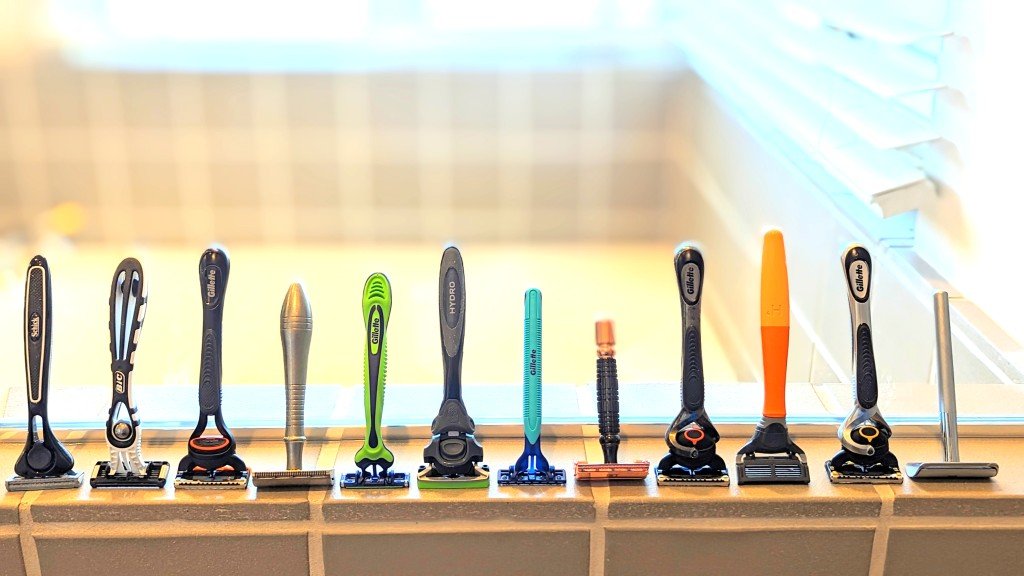
The global shaving products market is becoming increasingly competitive. Established international brands continue to dominate many retail channels, but wholesalers, supermarket chains, distributors, and emerging personal care companies are exploring another option: private label razors.
Instead of relying entirely on well-known brands, businesses can develop shaving products under their own names. They can choose product specifications, packaging styles, price positioning, and distribution strategies while working with an experienced razor manufacturer.
This approach offers several commercial advantages:
- Build brand recognition under your own company name.
- Develop products for specific customer groups.
- Create more control over product positioning and retail pricing.
- Expand an existing personal care product portfolio.
- Establish a long-term manufacturing and supply relationship.
Recent retail industry coverage has highlighted how established manufacturers also participate in producing private-label shaving products for major retailers. This demonstrates that private-label manufacturing is not limited to small or newly established brands.
For importers and distributors, the opportunity is clear: rather than competing only on the resale price of existing brands, businesses can develop their own product identity and customer relationships.
2. What Are Private Label Razors?
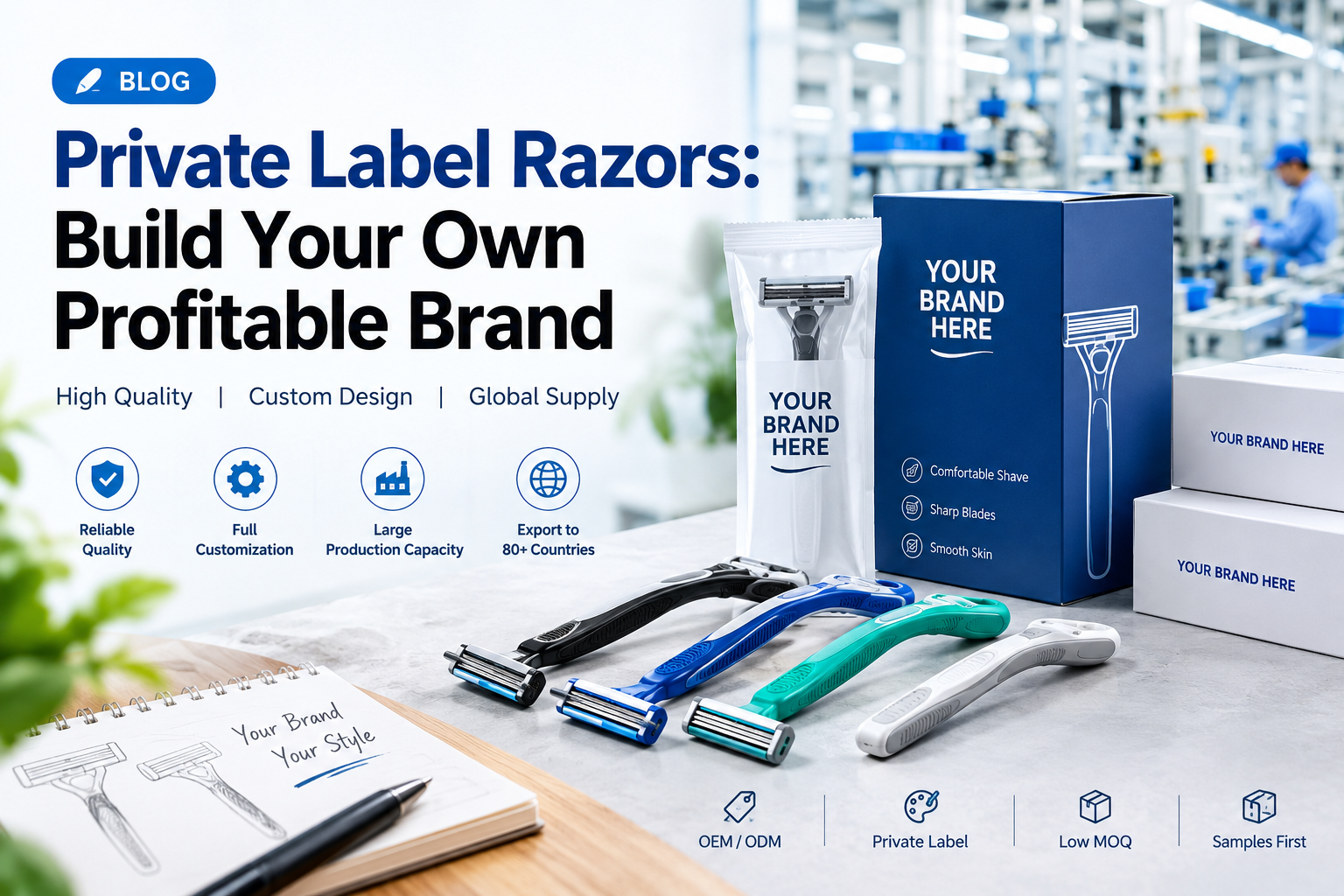
Private label razors are shaving products manufactured by a third-party factory and sold under a buyer’s brand name.
The buyer generally manages brand positioning, product selection, packaging requirements, and sales channels. The manufacturer handles product development, production, quality control, and order fulfillment according to the agreed specifications.
A private label razor project may include:
- Custom brand logo and product identification.
- Selection of razor models and blade configurations.
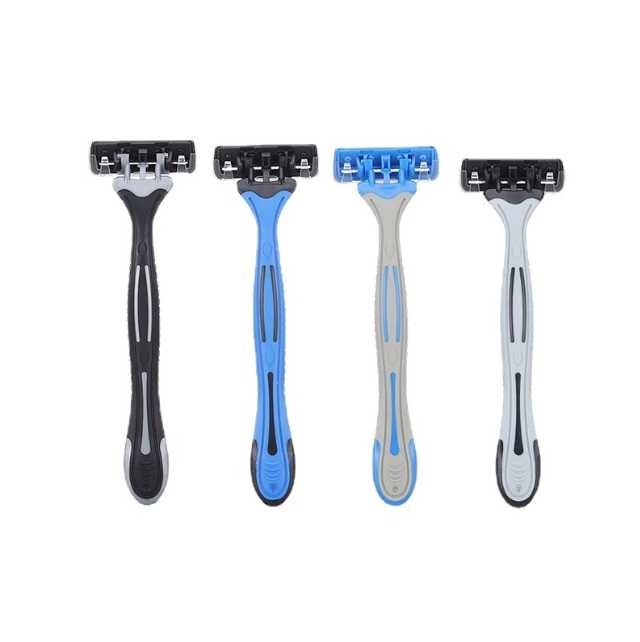
- Customized handle colors.
- Printed blister cards, paper cards, or other packaging.
- Customized product combinations and assortments.
- Bulk production and export arrangements.
For example, a distributor selling personal care products may decide to launch a three-blade disposable razor under its own brand. The distributor provides the brand identity and packaging requirements, while the manufacturer produces the razors and prepares the finished goods for shipment.
The result is a product that the distributor can market and sell as its own brand.
3. Private Label Razors vs. Selling Established Brands
For many importers, the decision is not simply about which razor is cheaper. It is about which business model offers better long-term commercial opportunities.
| Comparison | Established Brands | Private Label Razors |
|---|---|---|
| Brand ownership | Belongs to the brand owner | Buyer develops its own brand |
| Product selection | Usually follows existing ranges | Can be selected from manufacturer options |
| Packaging | Mostly standardized | Can be customized |
| Market positioning | Controlled by brand owner | Buyer has greater control |
| Pricing strategy | Influenced by brand positioning | Buyer determines its own resale strategy |
| Brand development | Builds another company’s brand | Builds the buyer’s brand |
| Product customization | Depends on brand owner | Subject to factory capabilities |
Established brands may offer strong consumer recognition and existing retail demand. Private label products, however, give businesses more flexibility to create a differentiated product portfolio.
The right choice depends on your distribution network, target market, investment capacity, and long-term business strategy.
4. Choose the Right Disposable Razor Models
Before contacting a private label razor manufacturer, buyers should identify which products best match their target market.
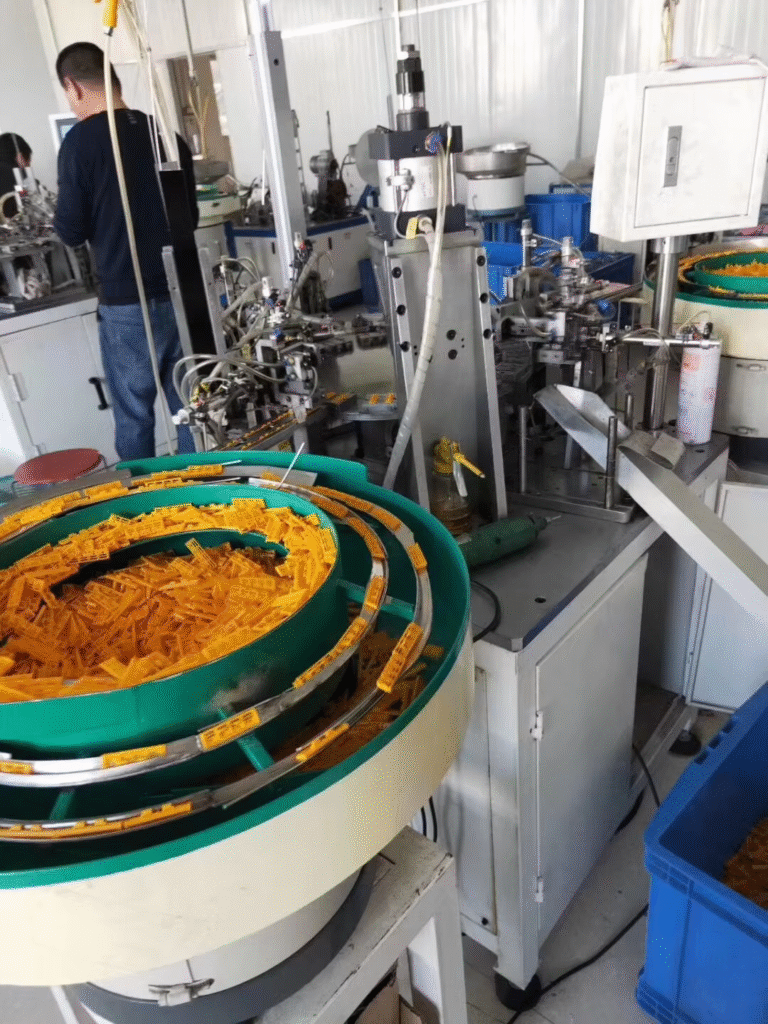
A successful product range does not necessarily need dozens of models. It is often more practical to begin with a small selection that covers different customer requirements.
4.1 Single-Blade Disposable Razors
Single-blade razors are commonly used in value-oriented product ranges and certain institutional applications.
Potential buyers include:
- Budget-focused distributors.
- Hospitality suppliers.
- Promotional product companies.
- Wholesale personal care suppliers.
Their relatively simple product structure can make them suitable for businesses targeting competitive price points.
4.2 Two-Blade Disposable Razors
Two-blade razors provide an option for buyers looking for a balance between product functionality and cost.
They can be considered for supermarket private labels, general personal care distribution, and everyday shaving product ranges.
4.3 Three-Blade Disposable Razors
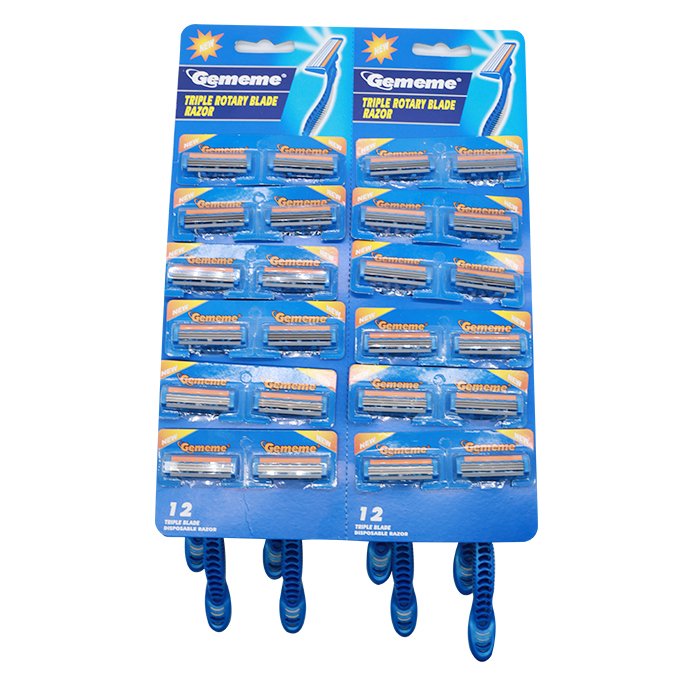
Three-blade razors are a practical option for businesses looking to establish a more developed shaving range.
They can be positioned for supermarkets, pharmacies, personal care retailers, and regional distributors.
4.4 Four-Blade and Five-Blade Razors
Four-blade and five-blade products can support a more premium product assortment.
Buyers may consider features such as:
- Pivoting razor heads.
- Lubricating strips.
- Ergonomic handles.
- Comfortable grip designs.
- Modern packaging presentation.
The final configuration should be selected according to the target market, product testing, and intended price range.
4.5 Women’s Disposable Razors
Women’s razors can help distributors expand beyond traditional men’s shaving products.
Depending on the available product range, buyers may consider different handle shapes, colors, head designs, and packaging styles for their intended customers.
5. How to Customize Your Private Label Razors
Customization is one of the main reasons businesses work directly with an OEM or ODM razor factory.
However, not every project requires completely new tooling or a fully customized product. Many private label projects can begin with an existing razor model and customized packaging.
5.1 Custom Brand Logo
Your brand logo is one of the most important elements of product identity.
It may appear on:
- Blister cards.
- Paper packaging.
- Product labels.
- Outer cartons.
- Promotional materials.
A consistent brand presentation helps customers recognize your products across different retail channels.
5.2 Custom Handle Colors
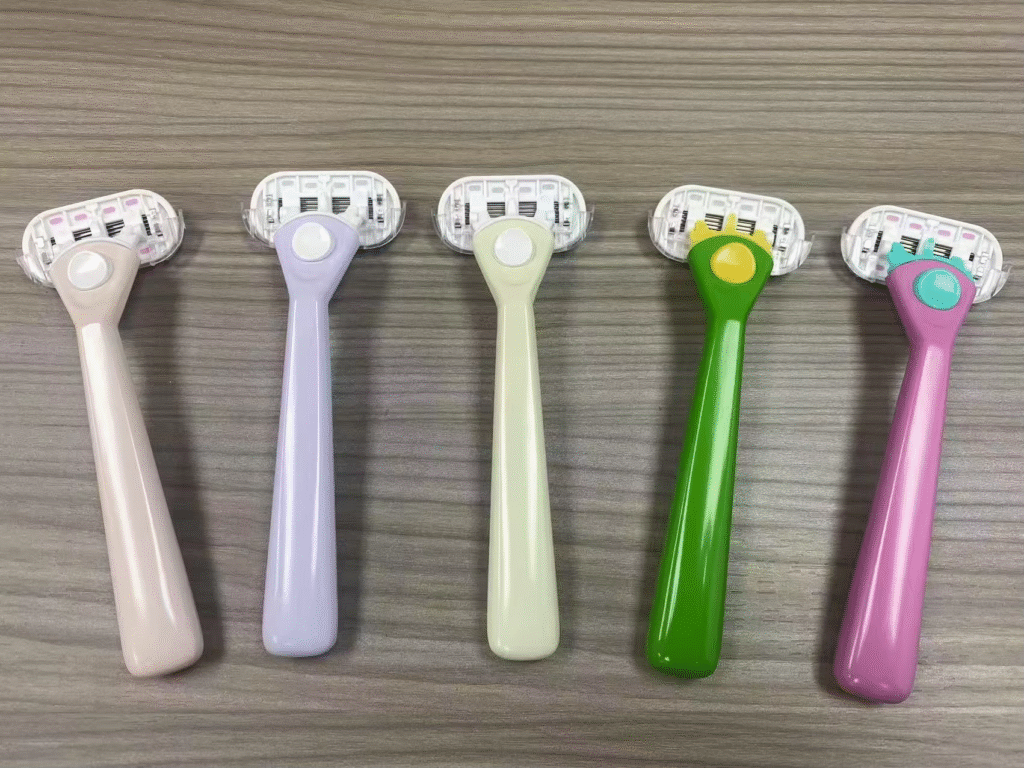
Handle color is a straightforward way to create a recognizable product appearance.
For example:
- Black and silver for a classic men’s shaving range.
- Blue and white for a clean, simple product identity.
- Pink and purple for selected women’s product lines.
- Green and neutral colors for a natural-inspired visual direction.
Actual color availability depends on the product model, material, and production requirements.
5.3 Custom Packaging
Packaging influences how a product is displayed, transported, and understood by customers.
Common packaging options include:
| Packaging Type | Typical Application |
|---|---|
| Blister card | Supermarkets and retail stores |
| Paper card | Wholesale and retail distribution |
| Individual packaging | Hotels and institutional supply |
| Multi-piece pack | Supermarkets and value retailers |
| Customized display box | Retail shelves and promotional sales |
When developing packaging, buyers should consider local language requirements, barcode placement, product information, packaging dimensions, and applicable market regulations.
5.4 Custom Product Combinations
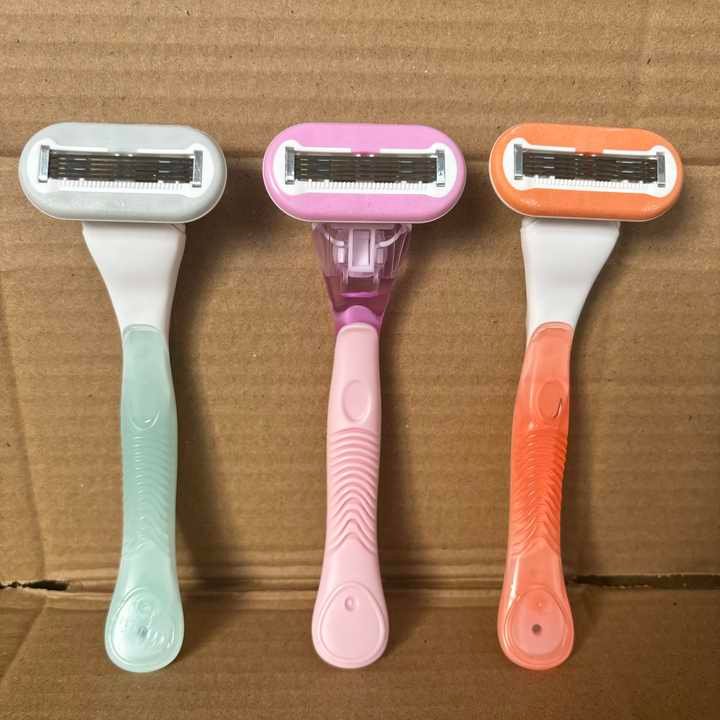
Some buyers prefer to sell razors in multi-piece packs rather than individual units.
Possible combinations include:
- One razor per pack.
- Two razors per pack.
- Three razors per pack.
- Five razors per pack.
- Larger value packs for wholesale and retail channels.
The most suitable pack size depends on consumer purchasing habits and local retail pricing.
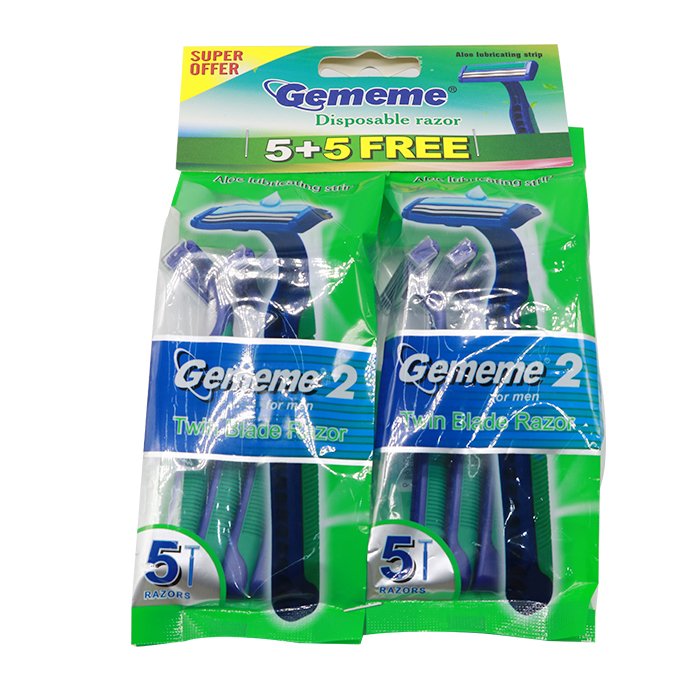
6. OEM vs. ODM: Which Manufacturing Model Is Right for You?
When sourcing private label razors, buyers will often encounter two terms: OEM and ODM.
Although they are related, they describe different levels of product development.
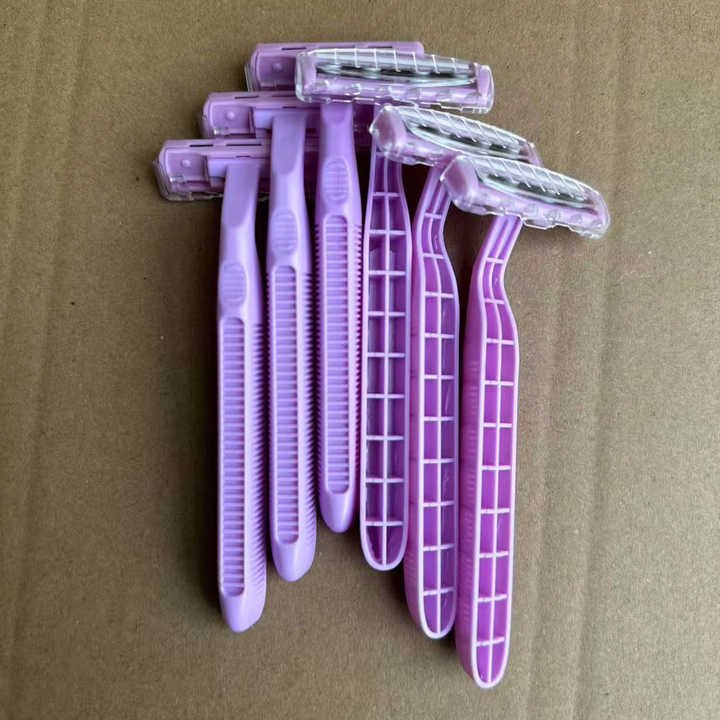
OEM Razor Manufacturing
OEM stands for Original Equipment Manufacturing.
In a typical OEM project, the buyer selects a product model and provides branding, packaging, and other specifications. The manufacturer produces the goods according to the agreed requirements.
OEM is suitable for businesses that already know which products they want to sell.
ODM Razor Manufacturing
ODM stands for Original Design Manufacturing.
ODM projects involve more product development input from the manufacturer. Depending on the factory’s capabilities, this may include product design options, structural suggestions, material selection, and packaging recommendations.
ODM can be useful for companies that want to develop a more distinctive product range.
Which Should You Choose?
| Business Situation | Recommended Approach |
|---|---|
| You already have a brand and product specifications | OEM |
| You want to customize existing razor models | OEM |
| You need assistance selecting product designs | ODM or OEM with development support |
| You want a completely new product structure | ODM, subject to tooling and development feasibility |
| You want to start with a simpler project | Existing model with private label packaging |
For many new importers, starting with an existing product model and customized packaging is a practical way to evaluate market demand before investing in more extensive product development.
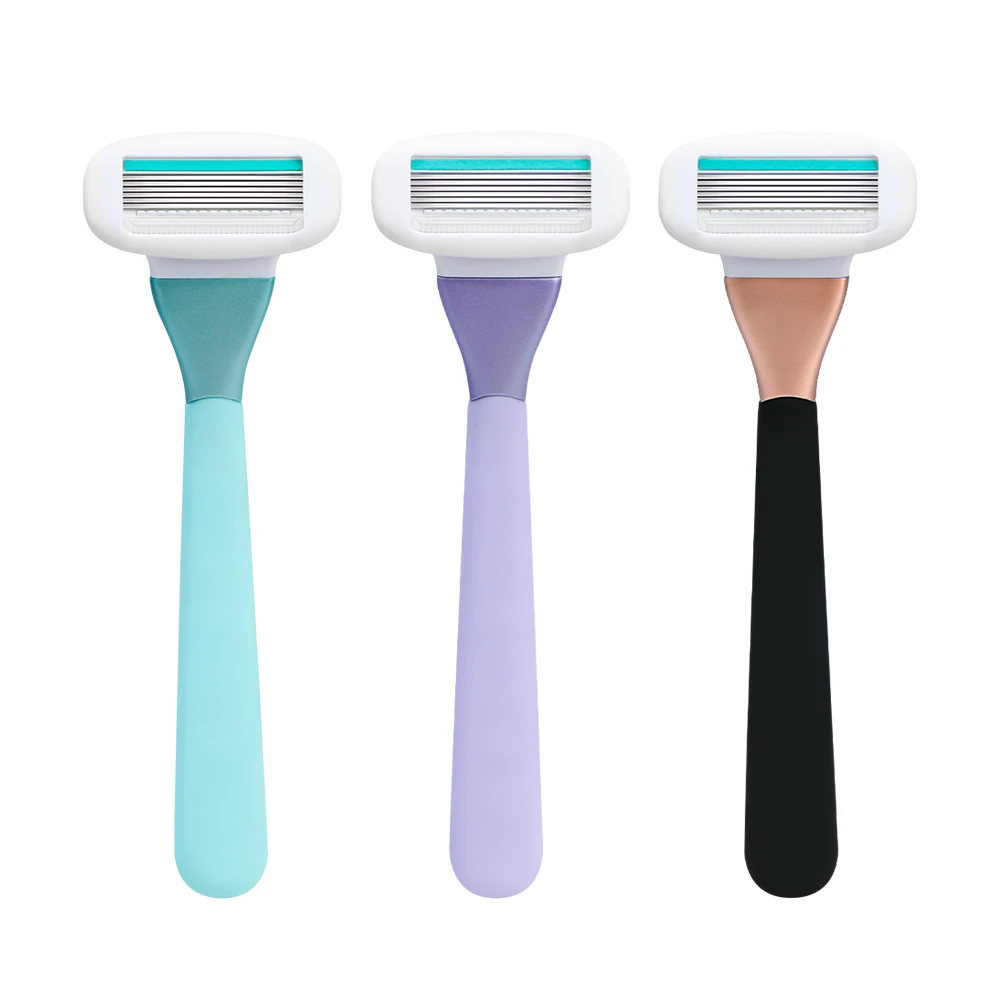
7. How to Find a Reliable Private Label Razor Manufacturer
Choosing the right supplier is one of the most important decisions in a private label project.
A competitive quotation is useful, but it should never be the only factor in supplier evaluation.
7.1 Manufacturing Experience
Ask how long the factory has been producing disposable razors.
An experienced manufacturer is more likely to understand product specifications, production processes, packaging requirements, and export procedures.
7.2 Production Capacity
Confirm whether the supplier can support your expected order quantity and future demand.
Questions worth asking include:
- How many production lines are available?
- What is the factory’s daily production capacity?
- Can production be scheduled for repeat orders?
- Does the factory have sufficient capacity during peak seasons?
7.3 Blade Material and Product Quality
Blade material and manufacturing consistency are important considerations.
Ask the manufacturer to provide product specifications and relevant material information. For example, buyers may want to confirm blade material, sharpness performance, corrosion resistance, and product inspection procedures.
Do not rely only on general descriptions such as “high quality” or “premium blades.” Request samples and evaluate the actual product.
7.4 Quality Control Procedures
A reliable manufacturer should be able to explain its quality control process.
Depending on the product and agreement, inspection may cover:
- Blade and razor-head appearance.
- Handle structure and assembly.
- Product dimensions and weight.
- Lubricating strip condition, where applicable.
- Packaging accuracy.
- Carton quantity and labeling.
- Final product appearance.
Third-party inspection can also be arranged when required by the buyer.
7.5 Export Experience
International buyers should confirm that the manufacturer understands export documentation, packaging standards, shipping arrangements, and communication across different time zones.
A supplier with established export experience can help reduce misunderstandings during order execution.
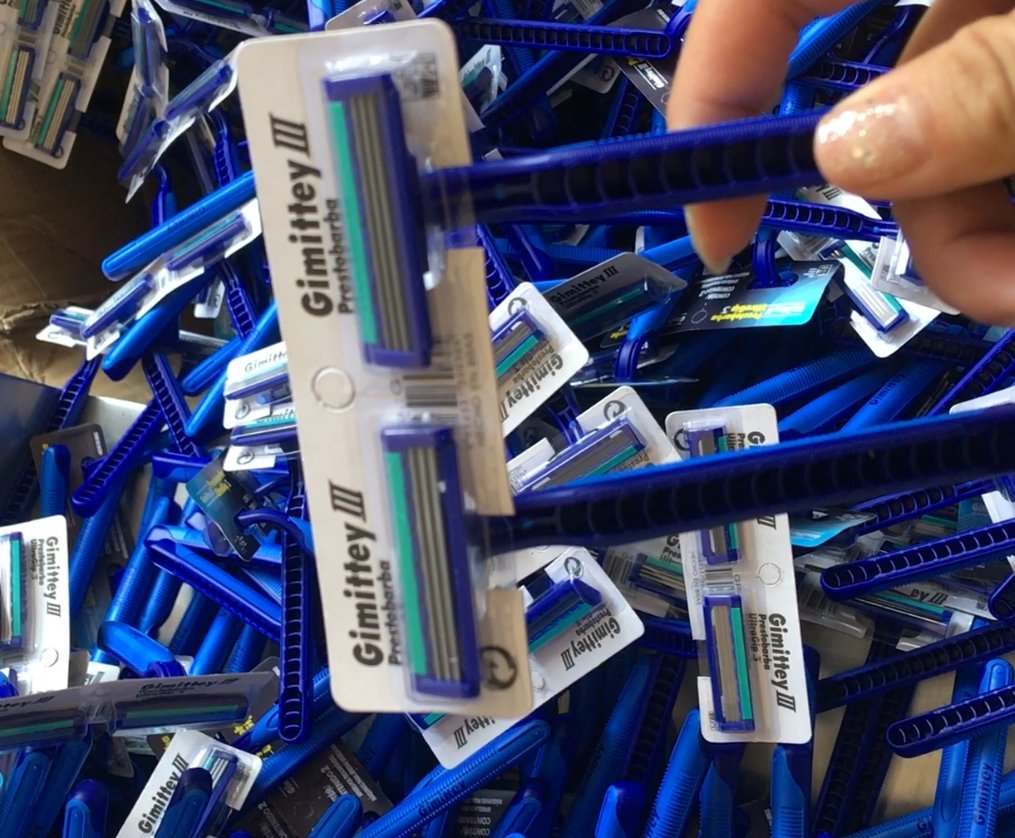
8. What Is the MOQ for Private Label Razors?
MOQ means Minimum Order Quantity.
For private label razor projects, MOQ depends on several factors:
- Whether the buyer selects an existing model or requests a new design.
- Whether customized colors are required.
- The type of packaging selected.
- Printing requirements.
- Material and production arrangements.
- The manufacturer’s production schedule.
An existing razor model with customized packaging may have different MOQ requirements from a completely new product design.
Before requesting a quotation, buyers should provide their expected order quantity, preferred razor model, number of blades, packaging type, and destination market.
This helps the factory evaluate the project and provide a more accurate proposal.
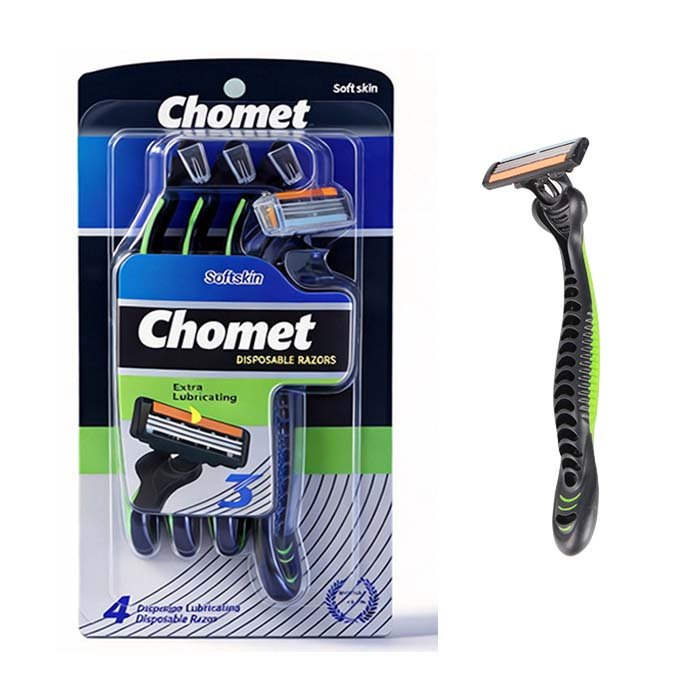
9. How Much Do Private Label Razors Cost?
There is no universal price for private label razors. The final quotation depends on the product specifications and order requirements.
Important cost factors include:
| Cost Factor | How It Affects Pricing |
|---|---|
| Number of blades | Different blade configurations have different material and assembly costs |
| Razor handle | Handle design and material affect production cost |
| Razor head | Structural complexity can influence manufacturing cost |
| Lubricating strip | Additional components affect product specifications |
| Packaging | Printing, materials, and packaging structure influence cost |
| Order quantity | Larger production runs may improve unit-cost efficiency |
| Customization | Special colors or new designs may require additional costs |
| Shipping terms | Freight, insurance, and delivery arrangements affect landed cost |
When comparing quotations, make sure you are comparing equivalent specifications.
A low-priced one-blade razor should not be compared directly with a five-blade razor featuring a pivoting head and customized retail packaging.
For importers, the more useful calculation is the total landed cost, including product price, freight, insurance, customs duties, taxes, and local handling charges where applicable.
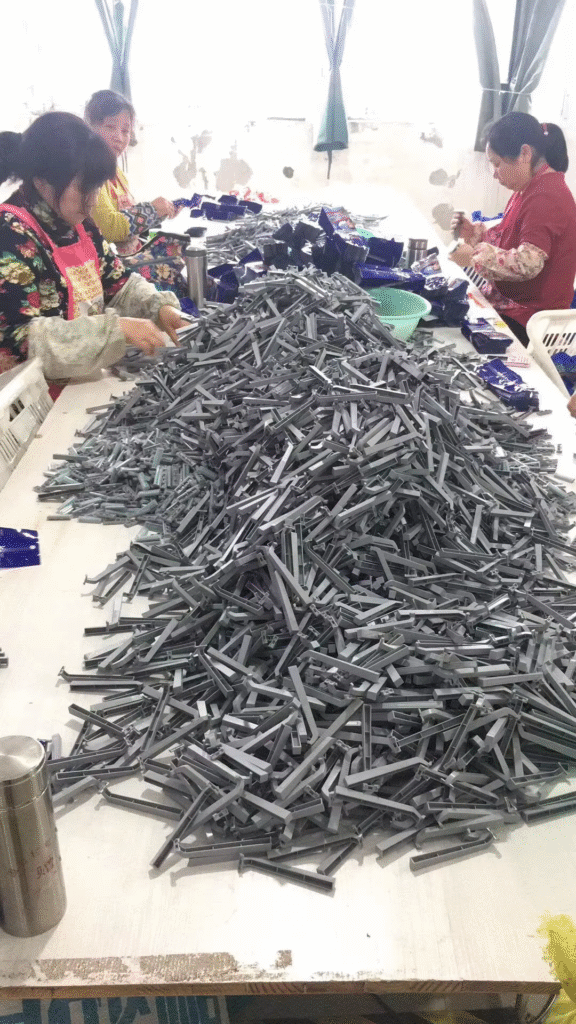
10. Private Label Razors for Different B2B Markets
Private label razors can serve multiple distribution channels. Each channel has different purchasing requirements.
10.1 Supermarkets and Hypermarkets
Retail chains may need several product options at different price levels.
A private label range can include basic disposable razors, multi-blade products, and larger value packs.
Packaging should be designed for clear product identification and shelf presentation.
10.2 Importers and Distributors
Importers and distributors often need stable supply, competitive purchasing costs, and products suitable for regional distribution.
A manufacturer that can supply multiple razor models and packaging options may help distributors develop a broader product portfolio.
10.3 Pharmacies and Personal Care Retailers
Pharmacies and personal care stores may prefer products with clear specifications, professional packaging, and consistent quality.
Product selection should reflect local customer expectations and retail positioning.
10.4 Hotels and Hospitality Suppliers
Hotels and hospitality suppliers may require individually packed disposable razors or products suitable for guest amenity programs.
Important considerations include hygiene, packaging convenience, carton quantities, and stable repeat supply.
10.5 E-commerce and Online Brands
Online brands may need product packaging that communicates key features clearly and protects products during fulfillment and transportation.
Multi-piece packs and customized product combinations may also be considered.
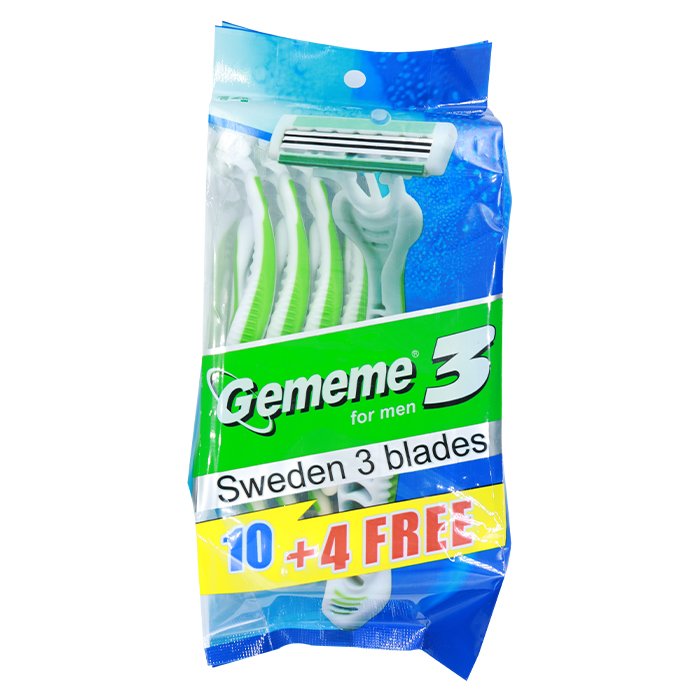
11. Why Product Samples Matter Before Mass Production
Never rely entirely on product photos when developing a private label razor project.
Samples allow buyers to evaluate the actual product before committing to a large order.
A practical sample evaluation should include:
- Handle comfort and grip.
- Razor-head structure.
- Blade appearance and shaving performance.
- Product assembly and finish.
- Lubricating strip condition, where applicable.
- Packaging appearance and quality.
If possible, test samples under realistic usage conditions and compare them with your current products.
After confirming the sample and specifications, both parties should agree on the approved product version before mass production.
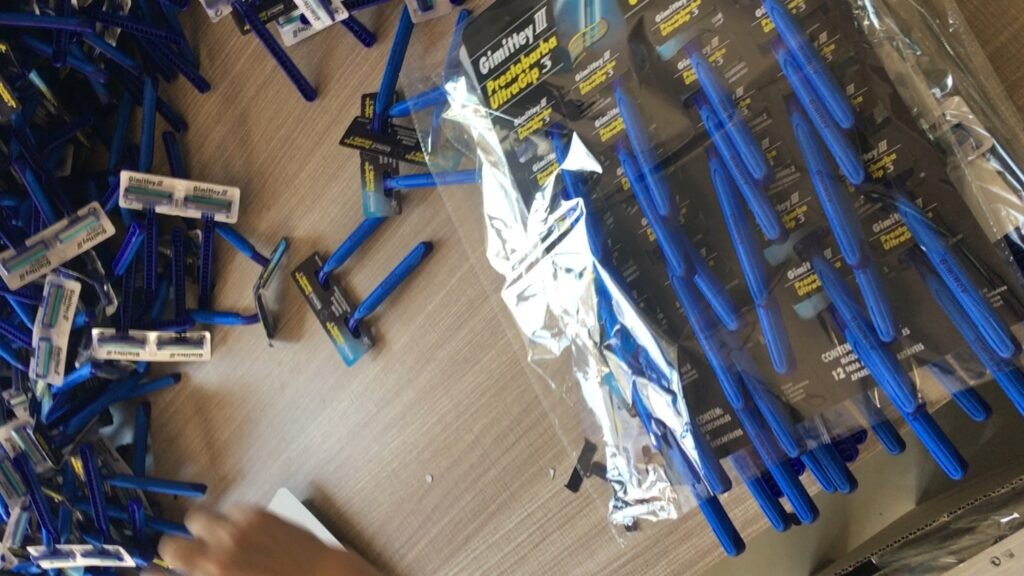
12. Quality Control and Inspection Before Shipment
Quality control should be considered throughout the production process, not only when the goods are ready to ship.
A typical process may include:
Before Production
- Confirm product specifications.
- Approve samples.
- Confirm packaging artwork.
- Check order quantity and delivery requirements.
During Production
- Monitor product assembly.
- Check component consistency.
- Inspect selected production batches.
- Verify packaging and labeling.
Before Shipment
- Conduct final product inspection.
- Check carton quantities.
- Verify packaging and shipping marks.
- Confirm order documents.
- Arrange third-party inspection if required.
Buyers may also request production photos or videos to understand the manufacturing progress.
A clearly agreed inspection procedure helps both the buyer and manufacturer reduce misunderstandings.
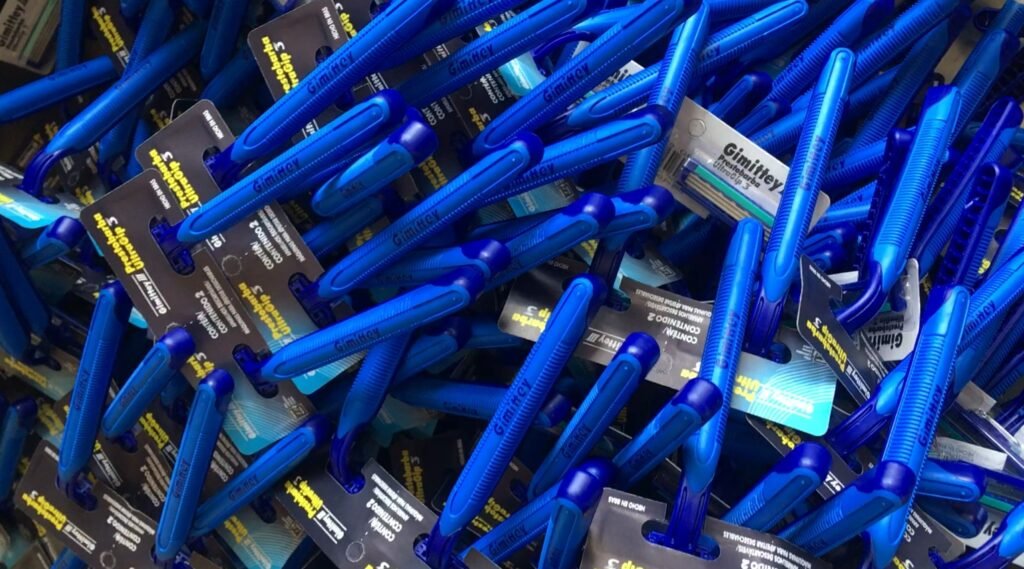
13. How to Start Your Own Razor Brand: A Practical Checklist
If you are planning to launch a private label shaving product range, the following steps provide a useful starting point.
| Step | What You Need to Prepare |
|---|---|
| 1. Define your market | Identify countries and sales channels |
| 2. Select your customers | Retailers, distributors, hotels, or online buyers |
| 3. Choose product models | Decide blade count and product type |
| 4. Define your brand | Prepare logo and brand identity |
| 5. Select packaging | Choose packaging style and language |
| 6. Request quotations | Provide product and quantity requirements |
| 7. Test samples | Evaluate product performance and appearance |
| 8. Approve specifications | Confirm final sample and packaging artwork |
| 9. Place the order | Agree on payment, production, and delivery terms |
| 10. Inspect and ship | Complete final inspection and export arrangements |
A structured process makes it easier to manage product development, production, and future repeat orders.
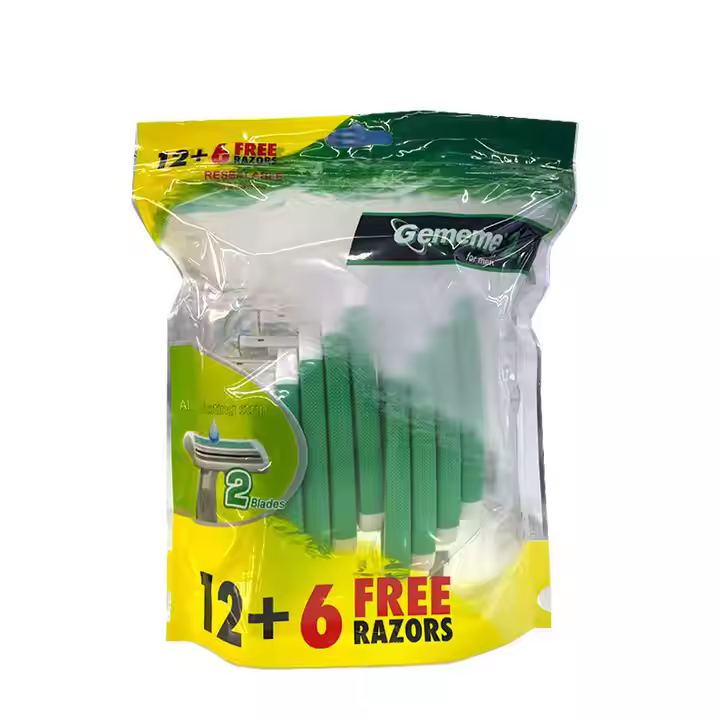
14. Why Work with a China Disposable Razor Manufacturer?
China has an established manufacturing supply chain for many personal care products, including disposable razors.
For international buyers, working directly with a manufacturer can provide access to product options, customization services, production planning, and export support.
However, buyers should evaluate each supplier individually. Factory location alone does not guarantee product quality or commercial reliability.
When choosing a Chinese razor factory, consider:
- Manufacturing history.
- Production equipment and capacity.
- Blade material and product specifications.
- Customization capabilities.
- Quality control procedures.
- Sample availability.
- Export experience.
- Communication and after-sales support.
A long-term manufacturing partnership should be based on product consistency, transparent communication, and reliable order execution.
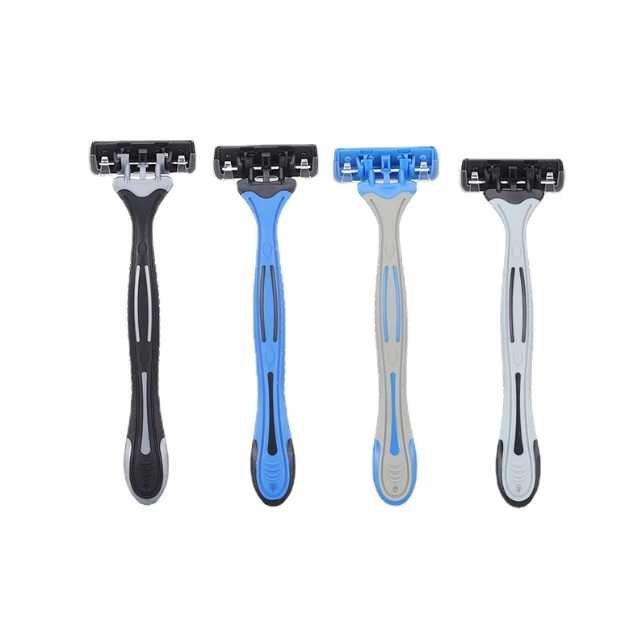
15. Gememe: Private Label Disposable Razor Solutions for Global Buyers
Gememe provides disposable razor manufacturing and private label solutions for international B2B customers.
Based in Yiwu, Zhejiang, China, Hongli Yida has been engaged in disposable razor production since 1990. Its manufacturing operation covers approximately 30,000 square meters, with more than 100 automatic machines and over 30 production and assembly lines.
The company offers a range of disposable razor products, including models with different blade configurations, and supports OEM, ODM, private label branding, customized colors, and packaging requirements.
What Gememe Can Offer
- Disposable razors with 1–7 blade options.
- OEM and ODM manufacturing support.
- Private label branding and customized packaging.
- Customized product colors, subject to model requirements.
- Samples for evaluation before mass production.
- Production photos and videos.
- Third-party inspection arrangements when required.
- Export support for international B2B orders.
Gememe uses Swedish stainless steel blades supplied by Sandvik, according to the company’s product and manufacturing specifications.
For buyers developing their own shaving brands, the goal is to establish a suitable product range, confirm the right specifications, and build a dependable supply relationship.
Visit the official website to explore available products and manufacturing services:
Website: https://www.yidarazor.com
Email: info@yidarazor.com
WhatsApp: +86 186 2672 6833
16. The Future of Private Label Razors
Private label razors are likely to remain an important sourcing option as retailers and distributors continue to evaluate product costs, brand ownership, and supply chain flexibility.
Several factors may shape future product development.
More Flexible Product Portfolios
Rather than relying on a single razor model, distributors may develop several product tiers to serve different customer groups.
Better Packaging Design
Packaging can help private label products communicate their features and brand positioning. Buyers may increasingly look for packaging that combines product protection, shelf visibility, and easier material identification.
Greater Focus on Product Specifications
B2B buyers are becoming more specific about blade configurations, handle materials, packaging formats, and inspection requirements.
Stronger Manufacturer-Buyer Relationships
Long-term cooperation can help businesses maintain product consistency, plan repeat orders, and develop new products as their markets grow.
For importers and distributors, the opportunity is not simply to purchase cheaper razors. It is to build a product range that supports their own brand and distribution strategy.
Conclusion: Build Your Own Shaving Brand with the Right Manufacturer
Private label razors offer importers, wholesalers, retailers, and personal care companies an opportunity to develop their own shaving product lines.
From selecting razor models and customizing packaging to confirming samples and arranging production, each stage requires careful planning.
The most important decision is choosing a manufacturer that understands your product requirements and can support your business as it grows.
If you are looking for a disposable razor manufacturer for your private label project, Gememe welcomes inquiries from importers, wholesalers, distributors, and brand owners worldwide.
Contact Gememe for Private Label Razor Manufacturing:
- Website: https://www.yidarazor.com
- Email: info@yidarazor.com
- WhatsApp: +86 186 2672 6833
Frequently Asked Questions
1. What are private label razors?
Private label razors are shaving products manufactured by a third-party factory and sold under the buyer’s own brand name. Buyers can customize product selection, logos, packaging, and other specifications.
2. Can I put my own logo on disposable razors?
Yes. Depending on the product and packaging options, manufacturers can provide private label services such as customized blister cards, paper cards, product labels, and outer cartons.
3. What is the MOQ for private label disposable razors?
MOQ varies according to the razor model, packaging, customization requirements, and production arrangements. Contact the manufacturer with your product requirements to obtain an accurate MOQ.
4. Can I customize the color of my disposable razors?
Many existing razor models support customized handle colors. Available colors and minimum quantities depend on the product structure and manufacturing requirements.
5. What is the difference between OEM and ODM razors?
OEM manufacturing generally follows the buyer’s selected product specifications and branding requirements. ODM involves more product development input from the manufacturer, depending on its design and engineering capabilities.
6. Can I receive samples before placing a bulk order?
Yes. Buyers should request samples to evaluate product appearance, handle design, blade configuration, and packaging before confirming mass production.
7. How do I choose a reliable private label razor manufacturer?
Evaluate manufacturing experience, production capacity, blade specifications, product quality, sample availability, customization capabilities, inspection procedures, and export experience.
8. Does Gememe provide OEM and ODM razor manufacturing?
Yes. Gememe supports OEM, ODM, private label branding, customized colors, and packaging services for international B2B buyers.
9. Can I order different razor models from one manufacturer?
Depending on the factory’s product range and MOQ requirements, buyers may source multiple disposable razor models from one supplier. Discuss the product mix and order quantities before placing an order.
10. How can I get a quotation for private label razors?
Send the manufacturer your preferred razor model, blade count, packaging requirements, estimated order quantity, and destination country. This information helps the factory prepare a more relevant quotation.